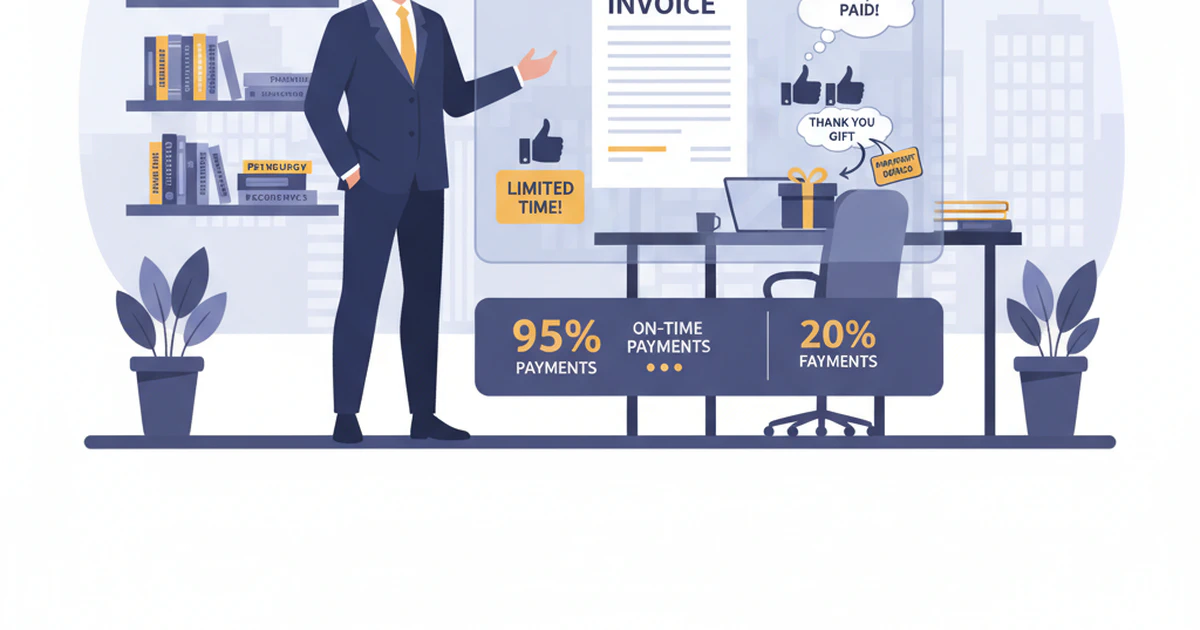
Lisa, a freelance copywriter, was frustrated. She’d been chasing the same $2,400 invoice for six weeks. The client loved her work, said the payment was “approved,” but somehow it never happened. Every follow-up got the same response: “It’s in process.”
Then Lisa learned about payment psychology. Instead of sending another “just checking on payment” email, she tried a different approach based on how people actually make payment decisions.
The result? Payment arrived within 48 hours.
The difference wasn’t threats or pressure – it was understanding the psychological factors that make people prioritize certain payments over others. When you know how payment decisions work in your client’s mind, you can ethically influence those decisions in your favor.
The Psychology Behind Payment Delays
Before diving into tactics, let’s understand why clients delay payments even when they have the money and intention to pay.
It’s Not Usually About Money Most payment delays aren’t because clients can’t afford to pay. They’re because paying you isn’t their highest psychological priority at the moment.
The Mental Load of Payment Decisions Every payment requires mental energy:
- Remember the invoice exists
- Find the invoice in their email
- Decide if the amount feels right
- Go through the actual payment process
- Deal with any questions or concerns
The Priority Stack Problem Your invoice sits in a mental stack with their rent, employees, suppliers, taxes, and personal bills. Where your invoice sits in that stack determines when (or if) it gets paid.
The Cognitive Biases at Play
- Recency bias: Recent expenses feel more urgent
- Loss aversion: They want to hold onto money longer
- Social proof: They pay vendors that others are paying
- Authority: They prioritize “official” or “important” looking requests
- Reciprocity: They pay people who have done things for them recently
Understanding these biases lets you position your payment requests to work with human psychology, not against it.
Tactic 1: The Urgency Without Pressure Method
The Psychology: People prioritize urgent items over important items. Create legitimate urgency without being pushy.
How It Works
Instead of generic payment reminders, give clients a specific reason why paying now matters.
Instead of: “Just following up on invoice #123. Payment is now 10 days overdue.”
Use: “Hi Sarah, I’m finalizing my September client list for priority booking in October. Invoice #123 needs to be settled by Friday to keep your spot reserved for the November project.”
More Urgency Examples
For Ongoing Services: “Hi Tom, I’m planning October’s content calendar. To ensure no service interruption, please settle invoice #456 by Tuesday so I can include you in next month’s batch.”
For New Projects: “Hi Lisa, I have two similar projects starting next week and need to confirm which client gets the earlier timeline. Settling invoice #789 by Thursday secures your preferred start date.”
For Year-End Billing: “Hi David, I’m closing my books for Q3 tax purposes on Monday. Invoice #321 needs to be processed this week to appear on your Q3 expenses rather than Q4.”
Why This Works
- Creates a legitimate deadline
- Connects payment to something they want (continued service, priority booking)
- Feels collaborative, not demanding
- Gives them a reason to act now instead of “later”
Tactic 2: The Social Proof Principle
The Psychology: People follow what others do. When clients know that others are paying, they’re more likely to pay too.
How It Works
Subtly indicate that other clients are paying their invoices promptly.
Instead of: “Payment is now 15 days late.”
Use: “Hi Mike, I’m processing this week’s payments from clients. I notice invoice #567 hasn’t come through yet – just wanted to make sure it didn’t get lost in your system.”
More Social Proof Examples
The Peer Reference Method: “Hi Jennifer, I was just talking to another client in your industry who mentioned how much they appreciate our quick turnaround billing system. Wanted to check if invoice #890 went through okay on your end.”
The Professional Standard Method: “Hi Robert, most of my consulting clients find the Net 7 payment terms work well for their cash flow. Is there anything about invoice #234 that’s causing a delay?”
The Process Improvement Method: “Hi Amanda, I’m reviewing my client payment process to make sure it’s working smoothly for everyone. Could you let me know the status of invoice #345?”
Why This Works
- Implies that paying promptly is normal behavior
- Creates subtle peer pressure without being threatening
- Positions non-payment as unusual rather than normal
- Makes them wonder if they’re behind compared to others
Tactic 3: The Reciprocity Boost
The Psychology: People feel obligated to return favors. Give clients something valuable right before requesting payment.
How It Works
Provide unexpected value immediately before following up on payment.
The Value-First Follow-Up: “Hi Susan, I noticed an opportunity for your business while working on another project. [Specific valuable insight or referral].
By the way, when you have a moment, could you check on the status of invoice #456? Want to make sure it didn’t get caught in spam filters.”
More Reciprocity Examples
The Helpful Resource Method: “Hi Mark, saw this article about new tax deductions for your industry and thought you’d find it useful: [link]. Also, could you check if invoice #678 made it through your accounts payable system?”
The Problem-Solver Method: “Hi Kelly, remembered you mentioned the challenge with [specific issue] last month. I found a solution that might help: [specific recommendation]. While I have your attention, is there any hold-up with invoice #789?”
The Referral Gift Method: “Hi James, I referred two potential clients to you this week who specifically asked about [your service]. Hope that works out well for you! Quick question – any update on invoice #123?”
Why This Works
- Creates a feeling of obligation to reciprocate
- Demonstrates ongoing value beyond the original work
- Makes you harder to ignore or treat impersonally
- Positions you as a valuable partner, not just a vendor
Tactic 4: The Loss Aversion Trigger
The Psychology: People are more motivated to avoid losing something than to gain something. Frame payment delays as potential losses.
How It Works
Position late payment as risking something they value.
Instead of: “Your payment is late. Please pay immediately.”
Use: “Hi Carol, I want to make sure nothing disrupts our working relationship. Invoice #345 has been outstanding for 3 weeks. Can we get this resolved this week so it doesn’t affect our ongoing project timeline?”
More Loss Aversion Examples
The Relationship Risk Method: “Hi Paul, our partnership has been great, and I’d hate for payment processing issues to create any tension. Can we get invoice #567 sorted out this week?”
The Opportunity Cost Method: “Hi Rachel, I’m having to turn down new projects because of cash flow from outstanding invoices. Don’t want this to impact our November start date – can you help me get invoice #789 processed?”
The Service Continuity Method: “Hi Steve, to avoid any interruption in service delivery, I need to clear outstanding invoices before starting October’s work. Can you help me resolve invoice #234?”
Why This Works
- Frames payment as protecting something valuable (relationship, service, timeline)
- Creates urgency without being threatening
- Appeals to their self-interest in maintaining the partnership
- Makes non-payment feel risky rather than just inconvenient for you
Tactic 5: The Authority and Legitimacy Boost
The Psychology: People respond faster to requests that feel official, legitimate, and important.
How It Works
Present payment requests with increased formality and official language.
The Professional Escalation Method: “Hi Michael,
As part of our standard accounts receivable process, I’m documenting the status of outstanding invoices for our quarterly review.
Invoice #890 (issued August 15) requires resolution within 5 business days to maintain current account status.
Please confirm payment processing or let me know if there are any issues that need addressing.
Best regards, [Your name] [Professional title]”
More Authority Examples
The Documentation Method: “Hi Lisa, I’m updating our client account records for the end of quarter and need to resolve the status of invoice #456. Can you provide an update on payment timing?”
The Process Reference Method: “Hi Andrew, per our service agreement section 3.2, payment for invoice #678 was due September 10. Can we get this processed to bring the account current?”
The Professional Standard Method: “Hi Karen, I’m implementing new client communication protocols and need to document the status of all outstanding invoices. Invoice #123 shows as pending – can you provide an expected payment date?”
Why This Works
- Increases perceived importance of the request
- Creates impression of formal business processes
- Makes ignoring the request feel more serious
- Positions you as a legitimate business entity, not just a person asking for money
Combining Tactics for Maximum Effect
The most effective approach often combines multiple psychological principles:
Example: Urgency + Social Proof + Reciprocity “Hi David,
Just sent you that industry report we discussed – think you’ll find the market analysis section particularly useful for your Q4 planning.
I’m closing out September billing this week and notice most clients have cleared their invoices except for #567. Could you check if that got processed on your end? Want to make sure we start October with a clean slate.
Thanks, Sarah”
This combines:
- Reciprocity (valuable report)
- Social proof (most clients have paid)
- Urgency (closing out September)
- Authority (formal process reference)
Ethical Guidelines for Payment Psychology
Do Use Psychology To:
- Encourage timely payment of legitimate invoices
- Make payment processes more convenient
- Build stronger client relationships
- Communicate value and professionalism
Don’t Use Psychology To:
- Manipulate clients into paying inflated amounts
- Create fake urgency or false scarcity
- Threaten relationships or services unfairly
- Pressure clients facing genuine financial hardship
The Golden Rule: Use these tactics the way you’d want vendors to treat you – professionally, respectfully, and with legitimate business reasons for urgency.
When Psychology Tactics Don’t Work
Sometimes payment delays aren’t psychological – they’re practical:
Real Cash Flow Problems If clients genuinely can’t pay, psychology won’t help. Focus on payment plans and maintaining relationships.
Process Issues If their accounting department has specific procedures, work with their process rather than trying to circumvent it.
Relationship Problems If there are unresolved issues with your work quality, fix those before focusing on payment psychology.
System Failures If invoices are getting lost in spam folders or their payment system is broken, solve the technical problem first.
Modern invoicing tools can help implement these psychological tactics more effectively. Apps like InvoiceZap make it easy to send professional, well-timed payment reminders that incorporate psychological principles without seeming pushy. You can schedule follow-ups, include value-added content, and maintain the professional tone that makes these tactics work.
Implementation Strategy
Week 1: Foundation
- Review your current payment follow-up process
- Identify which clients typically pay late
- Prepare value-added content for reciprocity tactics
Week 2: Test Urgency
- Try urgency tactics with 2-3 overdue invoices
- Track response rates and payment speed
- Refine your urgency messaging
Week 3: Add Social Proof
- Incorporate social proof language into follow-ups
- Test different ways of indicating payment is normal
- Monitor client responses and comfort levels
Week 4: Combine Tactics
- Use multiple psychological principles together
- Track which combinations work best for your client types
- Develop templates for common scenarios
Ongoing: Measure and Adjust
- Track average payment times before and after
- Monitor client relationship quality
- Adjust tactics based on what works for your specific clients
The Bottom Line
Payment psychology isn’t about manipulation – it’s about understanding how people make decisions and communicating in ways that work with natural human tendencies.
The difference between “please pay this invoice” and a psychologically-informed payment request can be the difference between waiting 45 days and getting paid in 5 days.
Your work deserves prompt payment. Your clients want to pay you. Psychology helps bridge the gap between intention and action.
Ready to implement payment psychology that gets you paid faster? Download InvoiceZap and start your 3-day trial. Create professional invoices with built-in psychological elements that encourage prompt payment.
Related Articles:
Ready to Streamline Your Invoicing?
Create professional invoices in 30 seconds with InvoiceZap's mobile-first design. No sign-up required.
Try InvoiceZap FreeTags: